Five arts, one heritage
Before there were galleries, there were walls, cloths and scrolls. Meet five Indian art forms that still live in the hands of village artists, and in the gifts and decor we love to make.
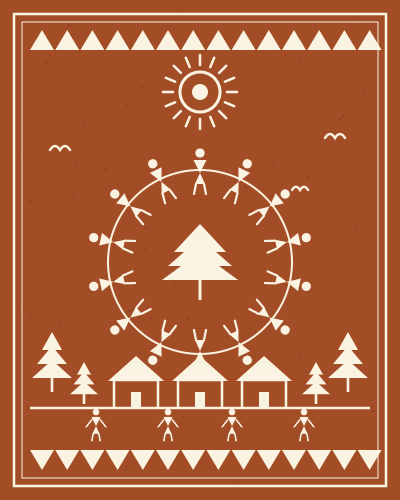
Warliवारली
Painted by Warli women on the mud walls of their huts, this art tells the story of daily life in the simplest shapes: a circle for the sun and moon, a triangle for mountains and trees, a square for a sacred piece of land. People are two triangles joined at the tip, and the famous tarpa dance is drawn as a ring of figures holding hands. The paste is made of ground rice and gum; the “brush” is a chewed bamboo stick. Weddings are marked by the lagnachi chowk, a painted square in the home.
- Made with
- Bamboo stick, rice paste
- Painted on
- Mud walls of huts
- Made by
- Warli tribe
- Circles, triangles, squares
- Dancing ring of figures
- Huts, trees, harvest scenes
- Always white on an earthy base
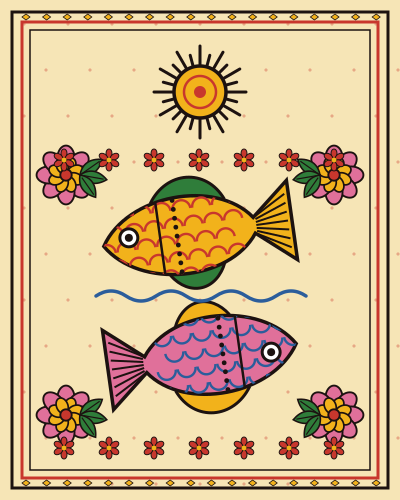
Madhubaniमधुबनी
Also called Mithila painting, it began as wall art painted by women for weddings and festivals, especially in the kohbar ghar, the bridal room. Almost no space is left empty: every gap is filled with flowers, leaves, geometric lines and dots, and figures are framed by a double-line border. Fish stand for luck and fertility, the sun and moon for life, and peacocks and lotus for love. Colours were once made from turmeric, lamp-black, flowers and leaves.
- Made with
- Fingers, twigs, nib pens
- Painted on
- Walls, now paper & cloth
- Made by
- Women of Mithila
- Double-line borders
- Fish, peacocks, sun & moon
- Big almond eyes
- No empty space left
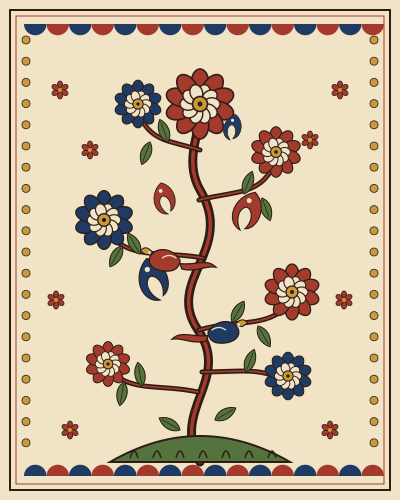
Kalamkariकलमकारी
The name joins qalam (pen) and kari (craft): drawing with a pen. In Srikalahasti the outlines are hand-drawn with a bamboo kalam; in Machilipatnam, carved wood blocks are used. Every colour comes from nature: indigo for blue, madder root for red, iron-and-jaggery for black, and the cloth is first treated with myrobalan and milk so the dye holds. Trees of life, flowers, paisleys and stories from the epics are the favourite themes.
- Made with
- Bamboo kalam, natural dyes
- Painted on
- Cotton cloth
- Made by
- Temple-town artisans
- Tree of life
- Paisleys & flowering vines
- Scalloped, floral borders
- Earthy natural-dye palette
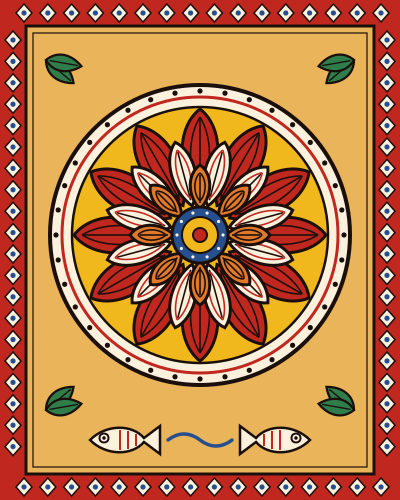
Pattachitraपट्टचित्र
From patta (cloth) and chitra (picture), this is a scroll-and-cloth tradition centred on Raghurajpur near Puri, linked to the Jagannath temple. The canvas is cloth layered with tamarind-seed gum and chalk, then polished smooth. Artists paint straight with the brush, with no pencil sketch, using colours made from conch shell, lamp-black and mineral pigments. Strong black outlines, almond eyes and ornate floral borders make it instantly recognisable.
- Made with
- Fine brushes, stone & earth colours
- Painted on
- Treated cloth & palm leaf
- Made by
- Chitrakar families
- Thick black outlines
- Almond-shaped eyes
- Patterned floral borders
- Lotus, fish and mythic stories
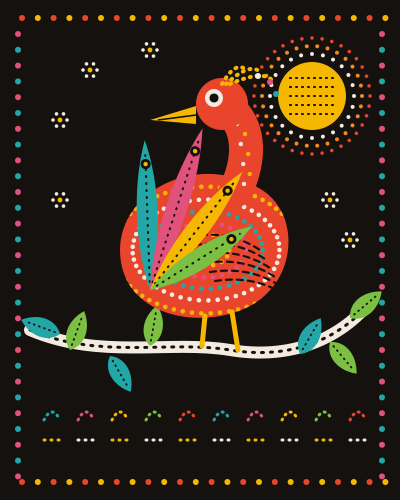
Gondगोंड
“Gond” comes from a word for green hills. Gond artists believe that a good image brings good luck, so trees, birds and animals are painted as living and full of spirit. The signature is the fill: every creature is made of tiny dots, dashes and lines that seem to move and flow. Jangarh Singh Shyam took the art from village walls to paper and canvas in the 1980s, and today it is one of India’s best-known tribal styles.
- Made with
- Brush, acrylic or poster colours
- Painted on
- Walls, paper & canvas
- Made by
- Gond community
- Dots, dashes & flowing lines
- Birds, deer, trees of life
- Vivid colours, often on black
- Patterns that fill every shape
Which art is your mood?
Pick the feeling you want your gift to have.
Spot the difference
Warli
- From
- Thane & Palghar, Maharashtra
- Tool
- Bamboo stick, rice paste
- Colours
- Red earth, Rice white, Mud brown
Madhubani
- From
- Mithila region, Bihar
- Tool
- Fingers, twigs, nib pens
- Colours
- Turmeric, Vermilion, Leaf green, Lamp-black
Kalamkari
- From
- Andhra Pradesh & Telangana
- Tool
- Bamboo kalam, natural dyes
- Colours
- Indigo, Madder red, Mustard, Iron black
Pattachitra
- From
- Odisha & West Bengal
- Tool
- Fine brushes, stone & earth colours
- Colours
- Hingula red, Haritala yellow, Conch white, Ramaraj blue
Gond
- From
- Madhya Pradesh & central India
- Tool
- Brush, acrylic or poster colours
- Colours
- Yellow, Coral, Teal, Pink
Want folk art on your gift?
Tell us the art form, budget and occasion. We’ll suggest hampers, boxes and decor to match.